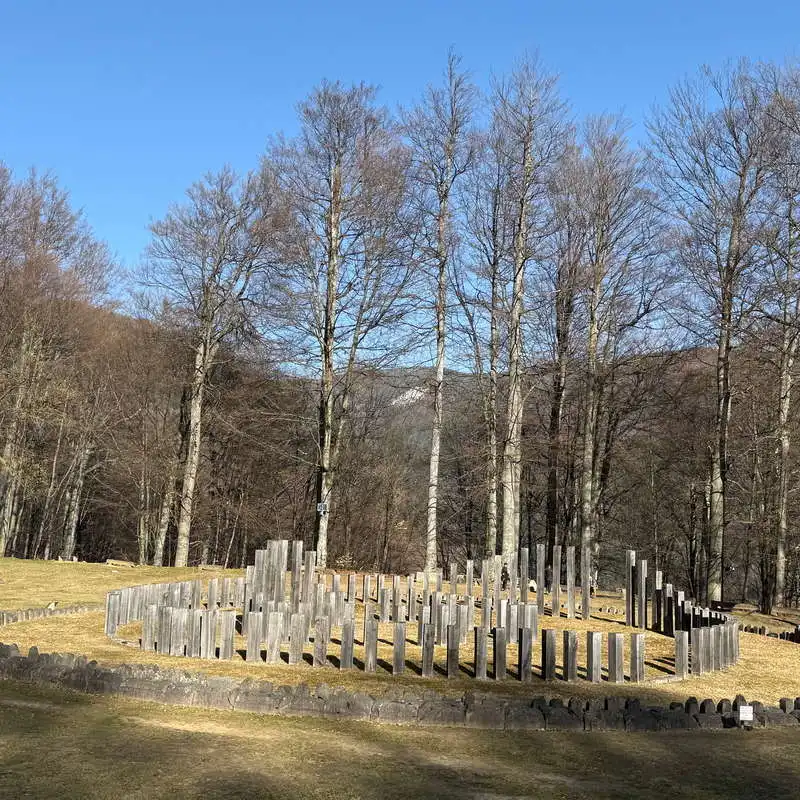
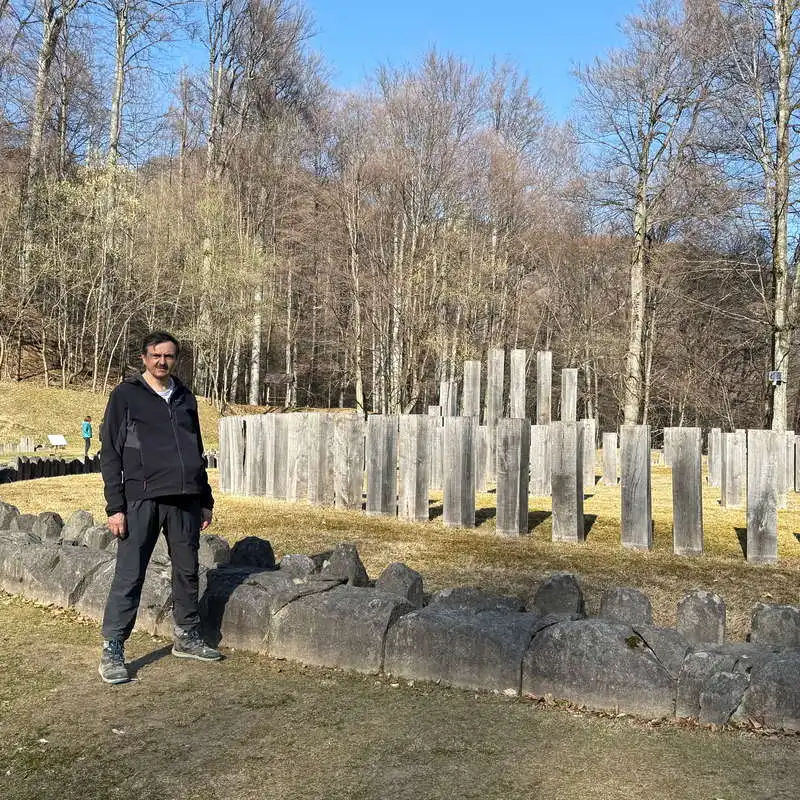
Sarmizegetusa Regia, Grădiștea de Munte, Hunedoara

The sacred cradle of the Dacians

Where, when, how much?

Sarmizegetusa Regia It is located in the village of Grădiștea de Munte, in the heart of the Orăștie Mountains, approximately 40 km from Orăștie and 65 km from Deva via DN7 and DJ705A. Access is via a paved mountain road, followed by a short 1 km walk through the forest to the archaeological site.

The visiting hours vary by season, generally between 9:00 AM – 8:00 PM in summer and 9:00 AM – 6:00 PM in winter, but it is recommended to check the updated schedule before your visit. The entrance fee is affordable: 10 lei for adults, with discounts for pupils, students, and pensioners. Parking in the area is free.

About Sarmizegetusa Regia

Sarmizegetusa Regia was the capital of the Dacian Kingdom and the most important political, military, and religious center of the Dacians, during the reign of Decebal. Strategically located in the Orăștie Mountains, the fortress was part of a vast defensive system, today included in the heritage UNESCO.

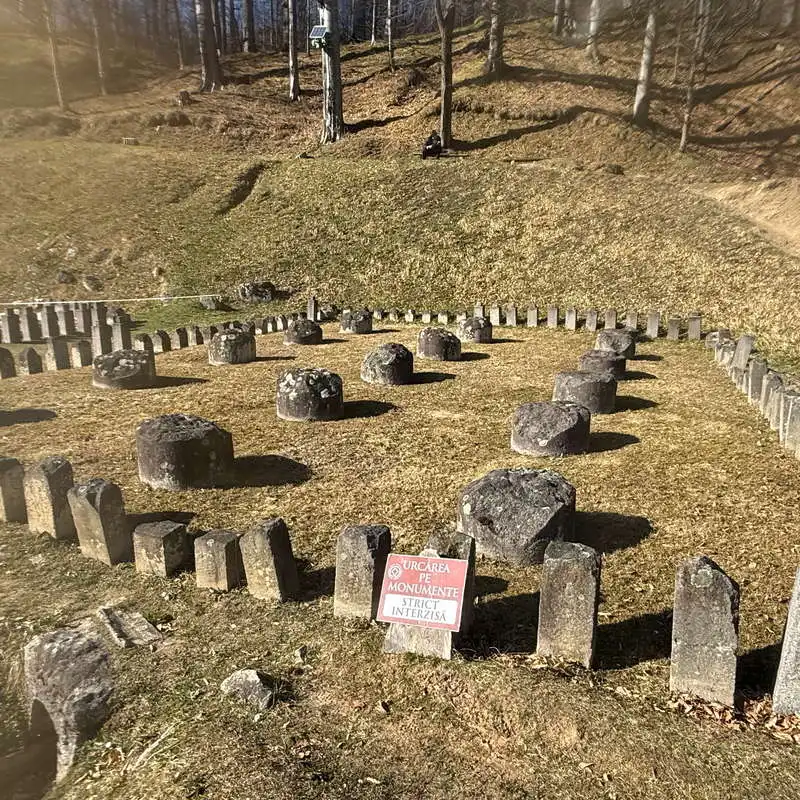
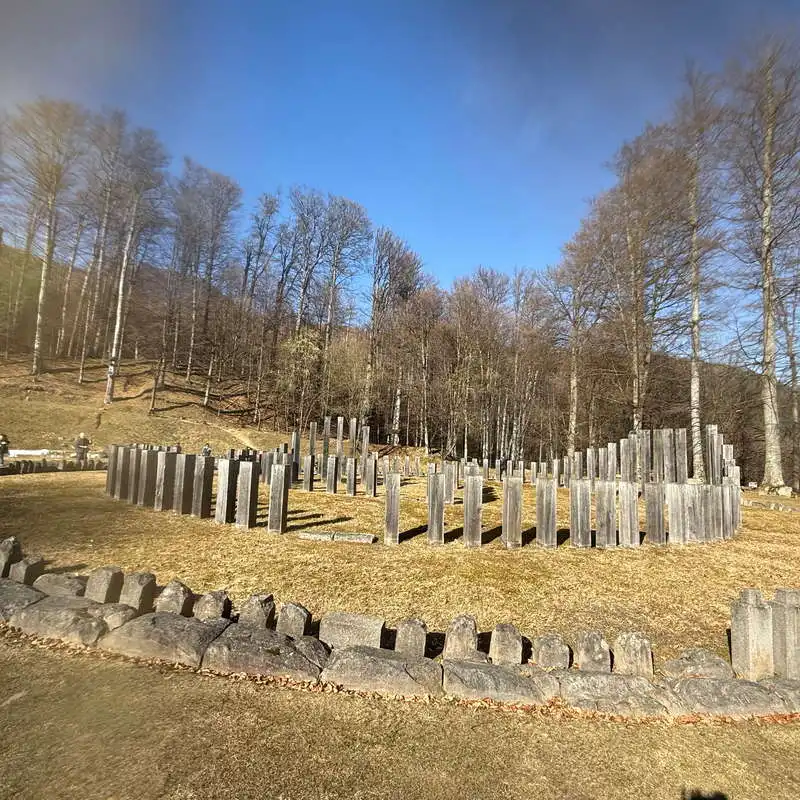
The place impresses with its well-preserved ruins: circular and rectangular sanctuaries, landscaped terraces, massive stone walls, and vestiges of everyday Dacian life. The famous circular sanctuary, often compared to Stonehenge, remains one of the most enigmatic symbols of Dacian spirituality.

Watch the YT video about Sarmizegetusa Regia!

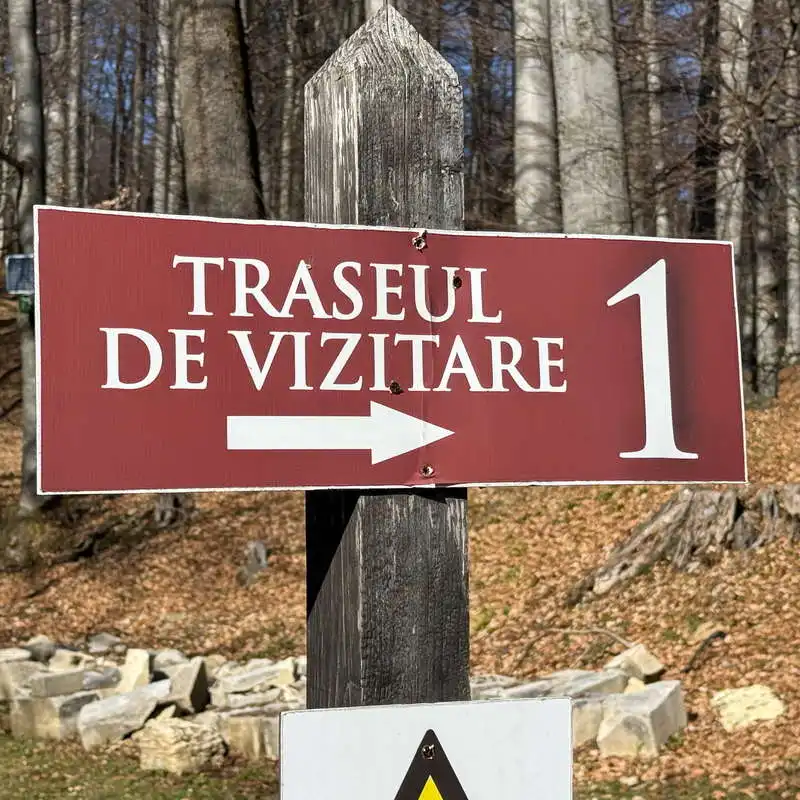
1. Visiting routes. West Gate and East Gate.

Visiting the Sarmizegetusa Regia site is done via two main routes, each offering a different perspective on the ancient Dacian capital.

The citadel was built between the 1st century BC and the 1st century AD, reaching its peak during the reign of Decebal. It played an essential role as a political, military, and religious center, while also serving as a symbol of Dacian power and unity in the face of Roman expansion.

West Gate This is the main access point for tourists and the easiest to traverse. The developed trail begins here, leading to the sacred area, passing by the defensive walls and Dacian terraces. It's the ideal choice for a relaxed visit.

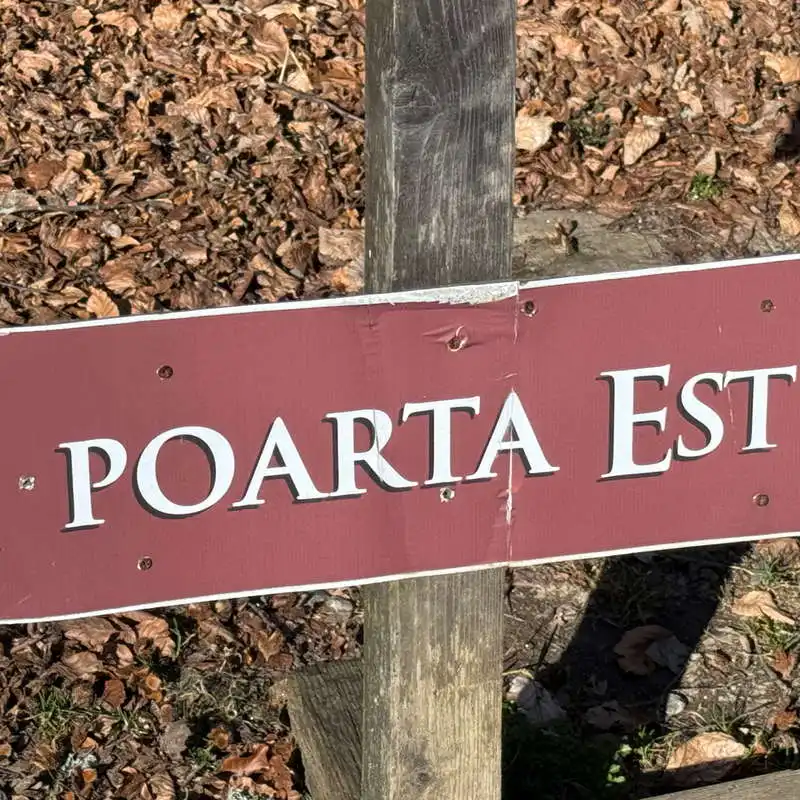
East Gate offers a wilder and more peaceful experience, with a less manicured trail, preferred by those who want to discover the site in a more authentic way.
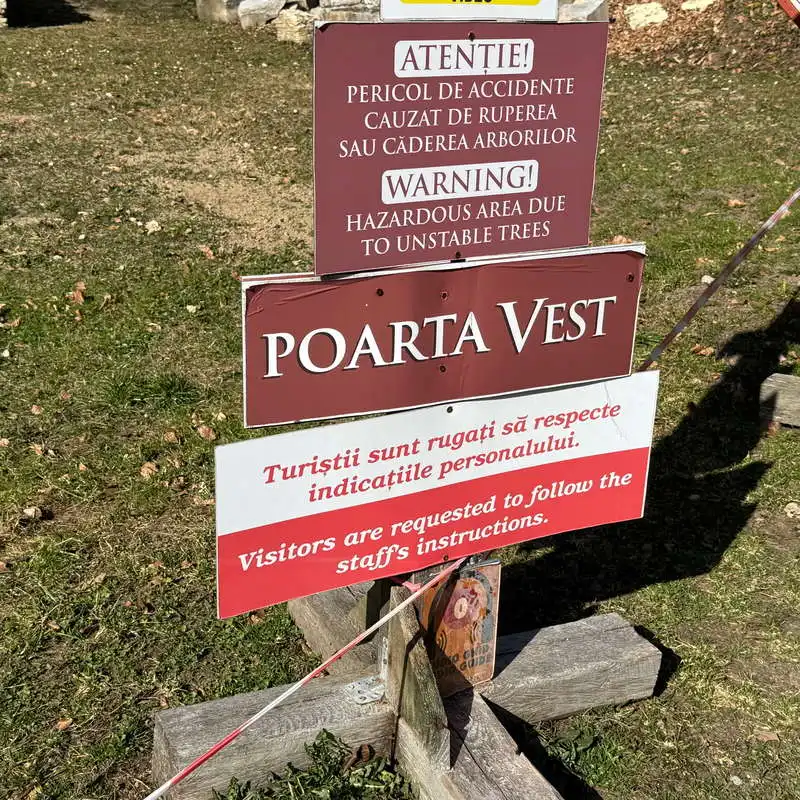
West Gate

West Gate (main entrance)

There are 2 visiting routes

East Gate

East Gate

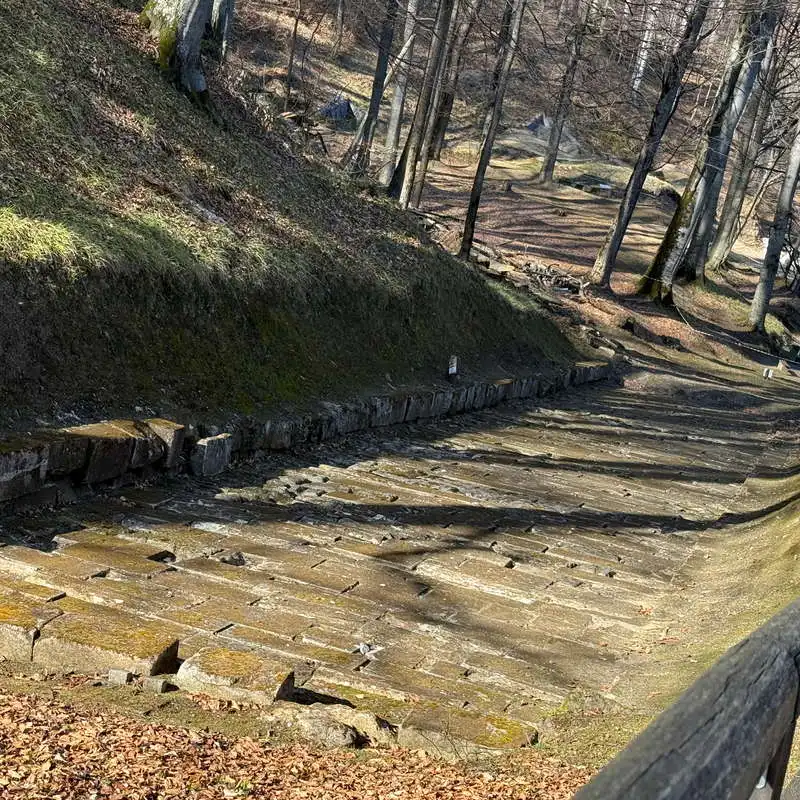
2. Paved road. Andesite altar.

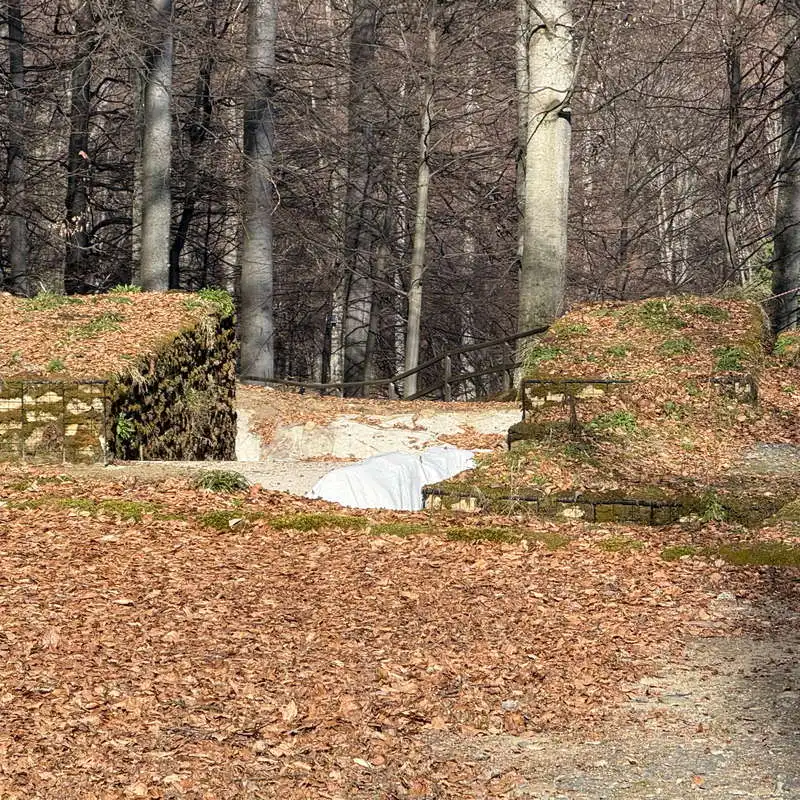
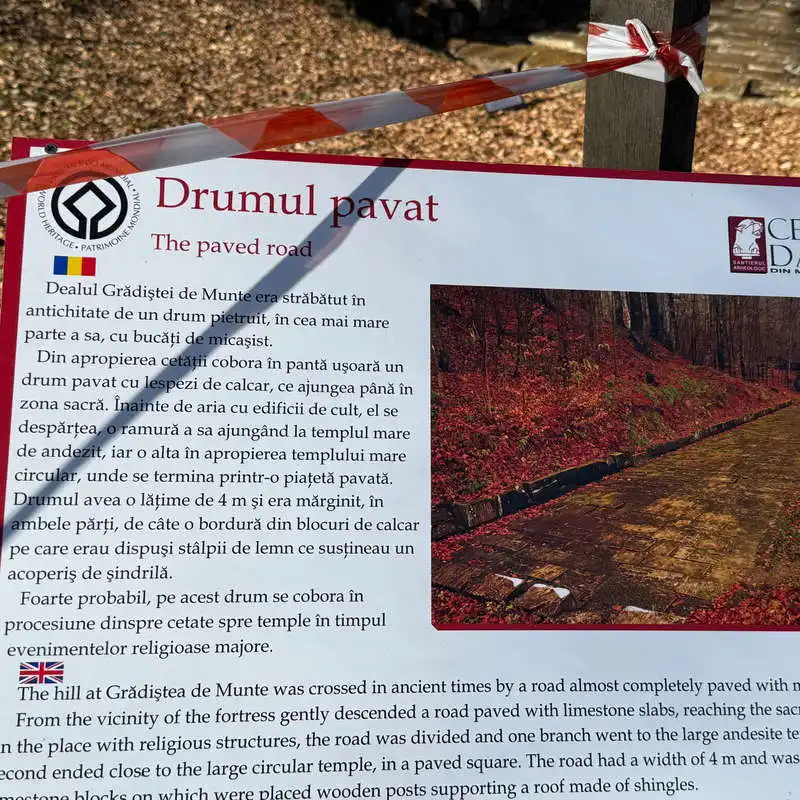
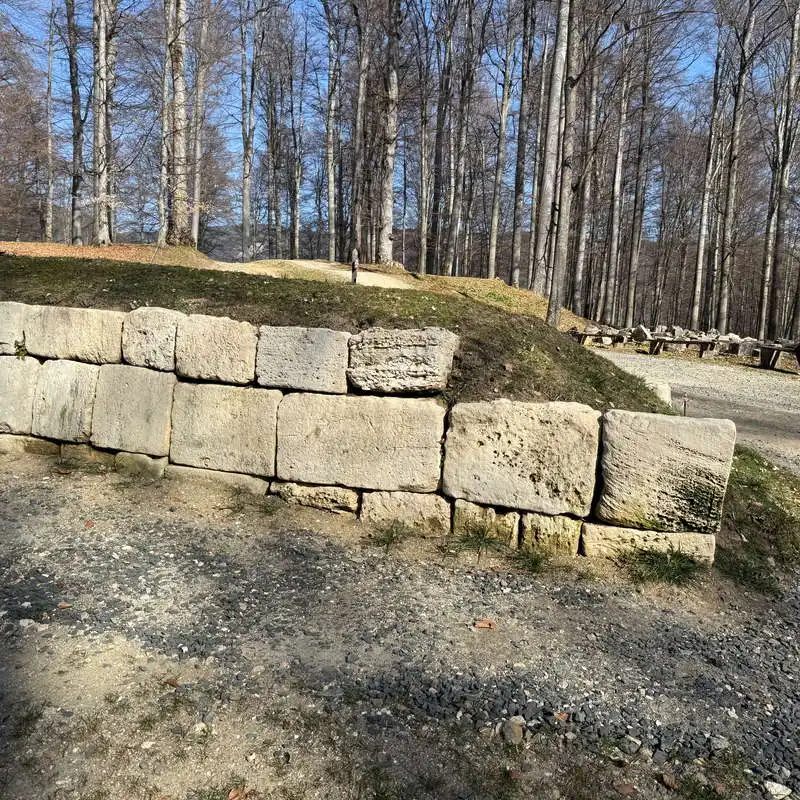
Within the Sarmizegetusa Regia site, one of the most impressive elements is the ancient paved road, constructed from carefully shaped stone blocks. It connected the various areas of the fortress, guiding today's visitor toward the sacred heart of the settlement, just as it once did for priests and leaders.

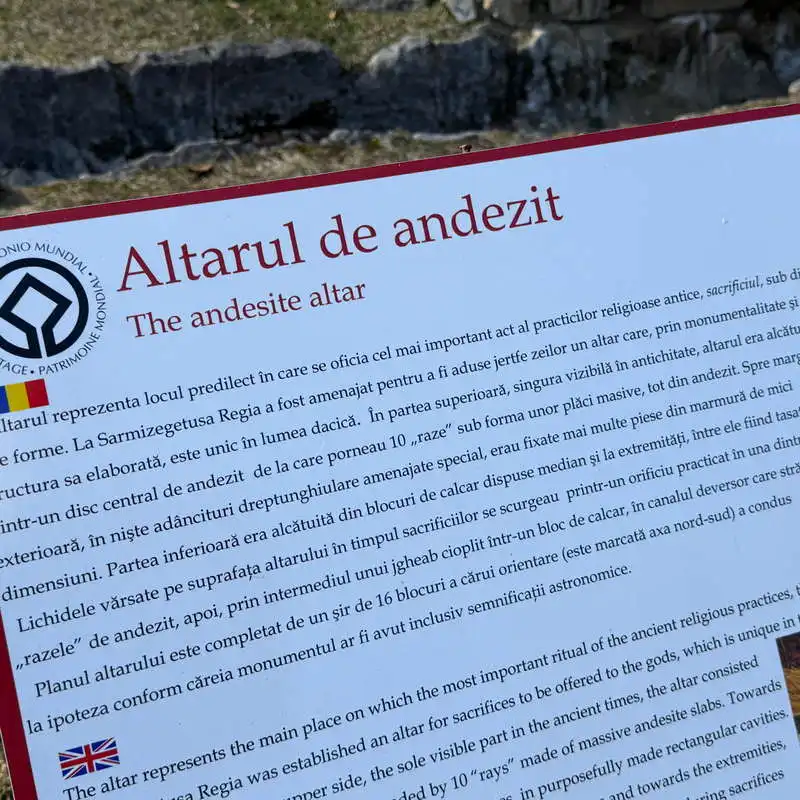
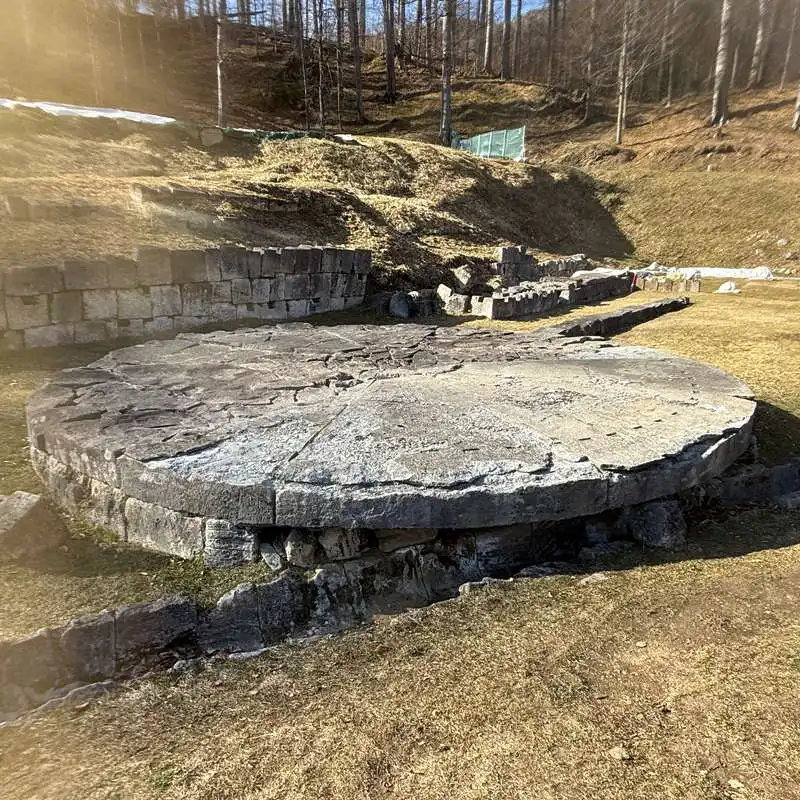
Along this road lies the famous andesite altar, a monument with a strong spiritual charge. Considered a site of ancient Dacian religious rituals, the altar impresses with its circular shape and the precision of its execution, suggesting advanced knowledge of astronomy and sacred symbolism.

Together, the paved road and the altar outline an authentic image of the Dacians' spiritual life and sophisticated organization, offering the visitor a profound insight into their mysterious world.

Paved road

Paved road

Andesite altar

Andesite altar

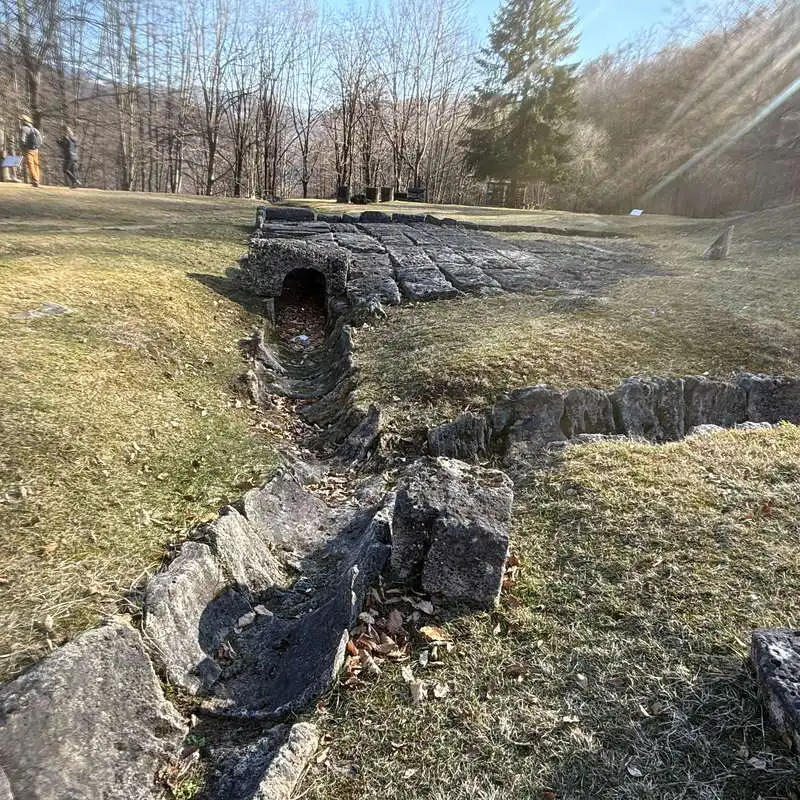
The Dacian sewage system

3. Limestone Temple. Small quadrangular temples.

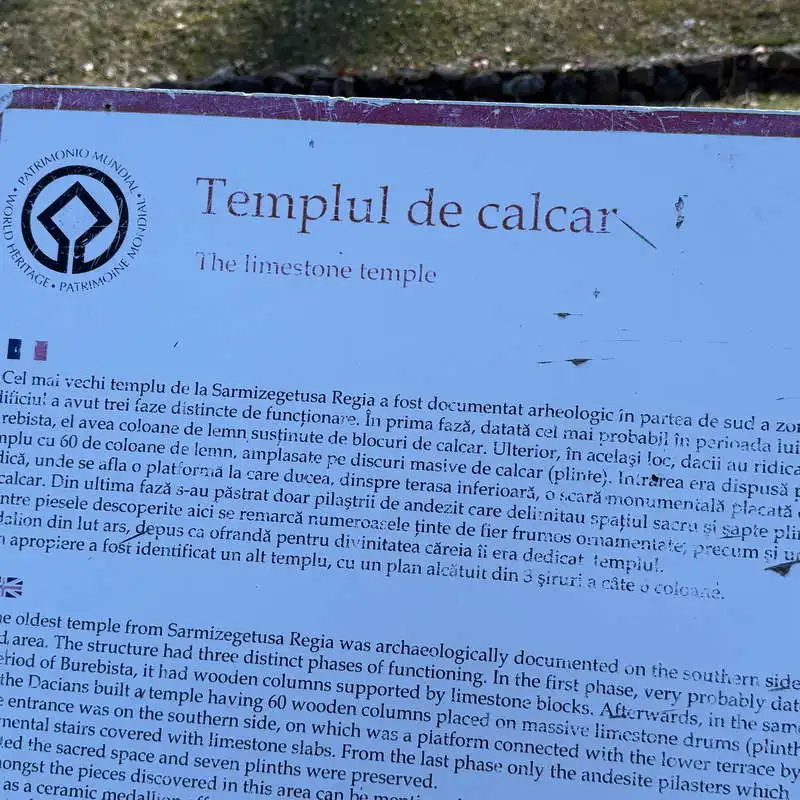
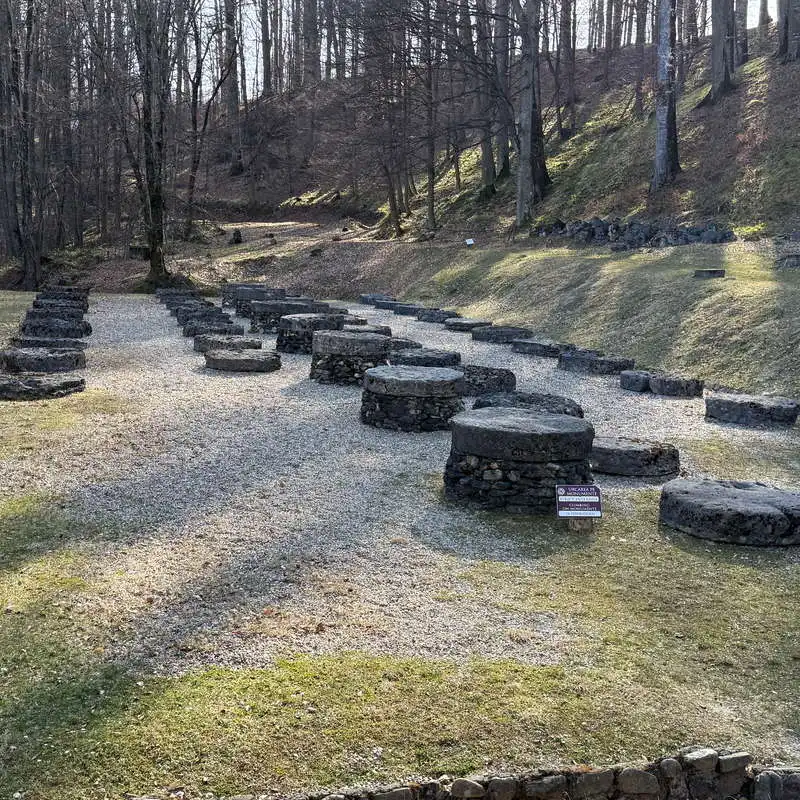
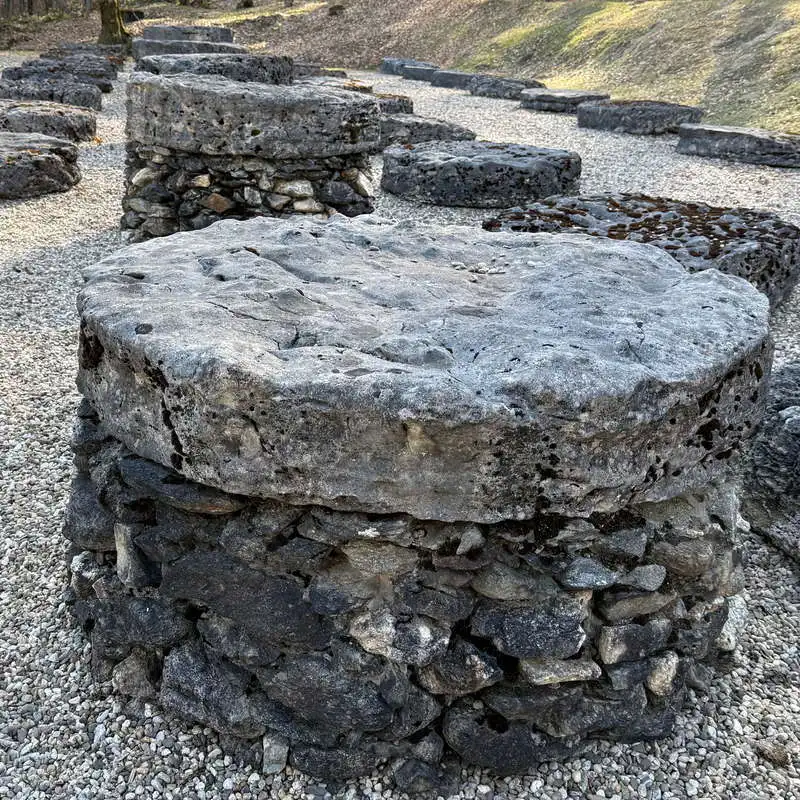
Another fascinating point of the Sarmizegetusa Regia site is limestone temple, built from massive blocks of white stone, carefully carved. This main temple was dedicated to important religious ceremonies and symbolizes the strong connection between the Dacians' political and spiritual power.

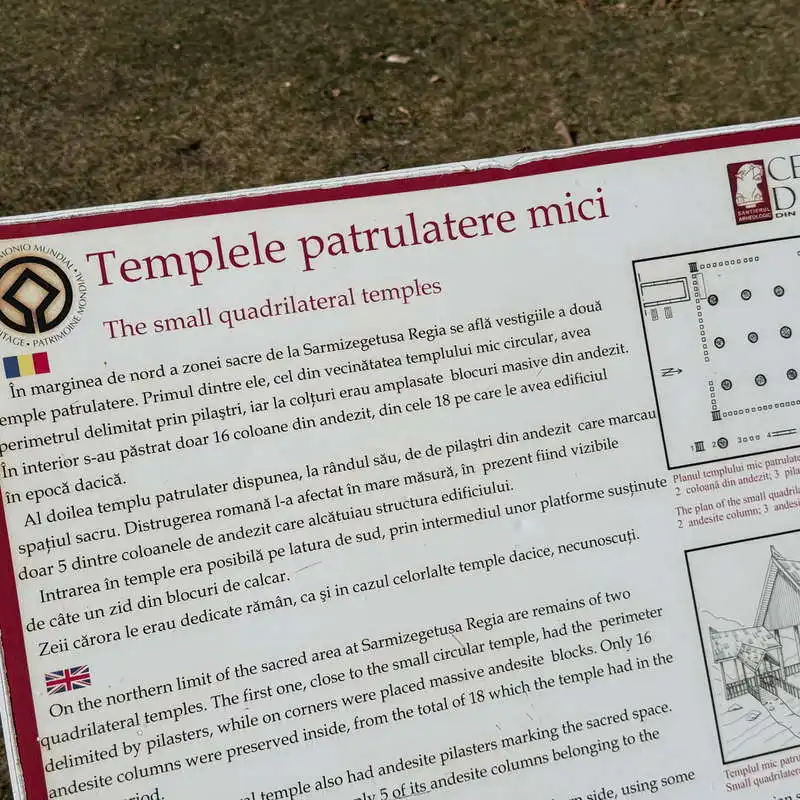
Nearby small rectangular temples, compact, rectangular buildings, which served local rituals and the community's religious practices. They reflect the Dacians' spiritual order and discipline and highlight the sophisticated way in which the entire sacred complex was organized.

Together, the limestone temple and the small quadrilateral temples offer visitors a complete picture of Dacian religion, where each stone and each shape had a symbolic and sacred role.

Limestone Temple

Limestone Temple

detail

Small quadrangular temples

Small quadrangular temples

4. The large circular temple

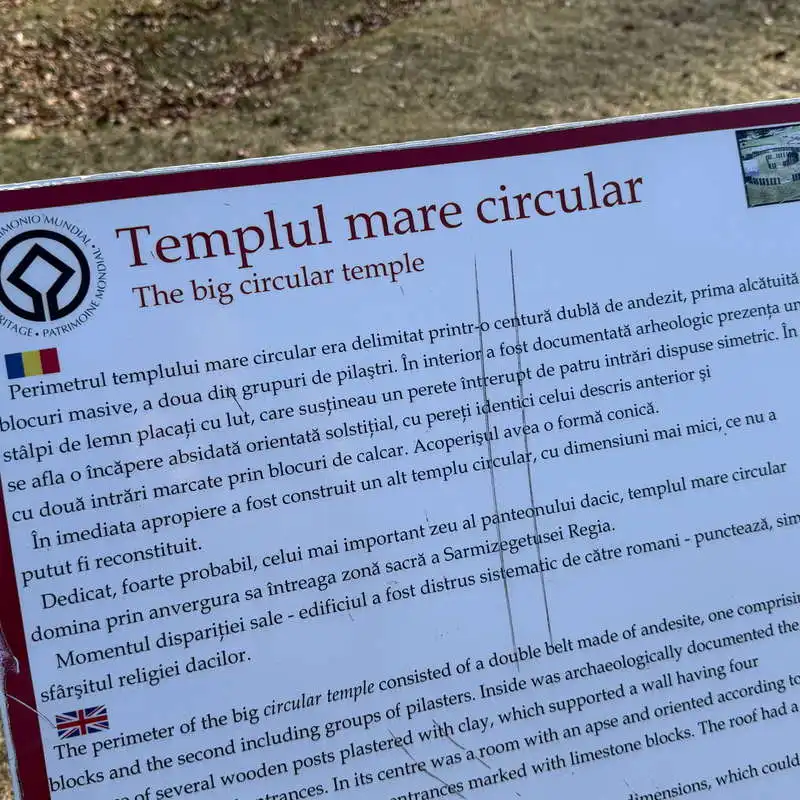
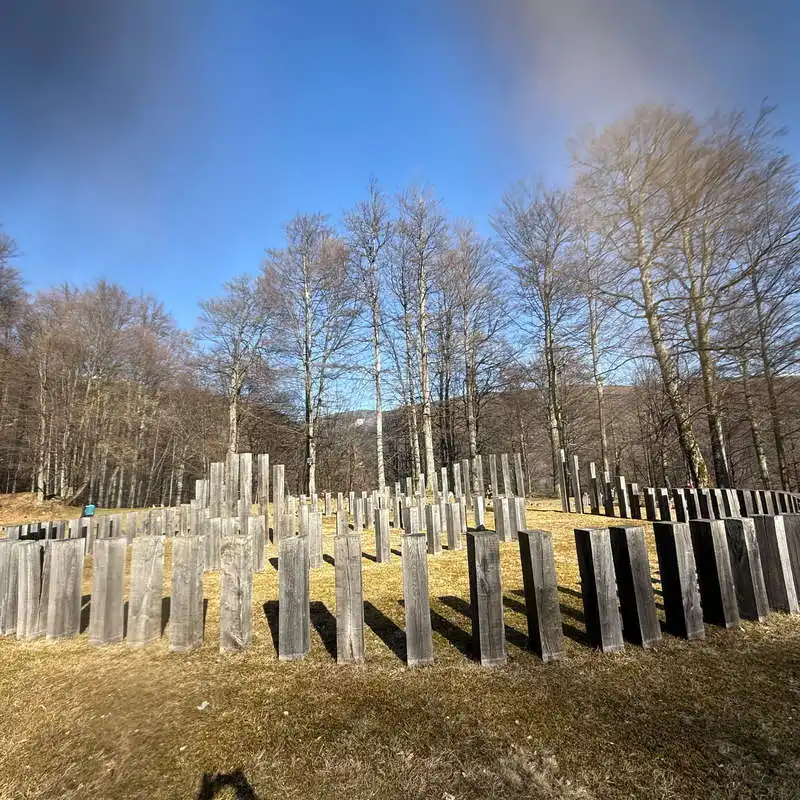
The most impressive religious building in Sarmizegetusa Regia is Great circular temple, also known as the circular sanctuary. Built from massive stone blocks, the temple was the heart of Dacian spiritual life and the main site for religious ceremonies dedicated to gods and rulers.

Its round shape and concentric arrangement suggest connections with astral movements and advanced knowledge of astronomy. This sanctuary symbolizes both the religious power and the political authority of the Dacian Kingdom, serving as an attraction and landmark of Dacian civilization.

Visiting the great circular temple offers a fascinating experience, allowing you to feel the sacred atmosphere of the place and understand the central role of religion in the organization and daily life of the Dacians.

The great circular temple

Dacian science

symbol image

The great circular temple

Conclusion

Sarmizegetusa Regia It is more than just a Dacian fortress – it is a symbol of the history, spirituality, and ingenuity of a people who profoundly marked Romanian culture. Each road, altar, or temple reveals stories about the power, faith, and daily life of the Dacians.

A visit here isn't just about seeing ruins, but about stepping into a universe full of mystery and significance, where nature and the past intertwine harmoniously. Sarmizegetusa Regia remains a must-visit destination for anyone who wants to understand and feel the true essence of Dacian civilization.

All the best!

Steps:

en_USEnglish