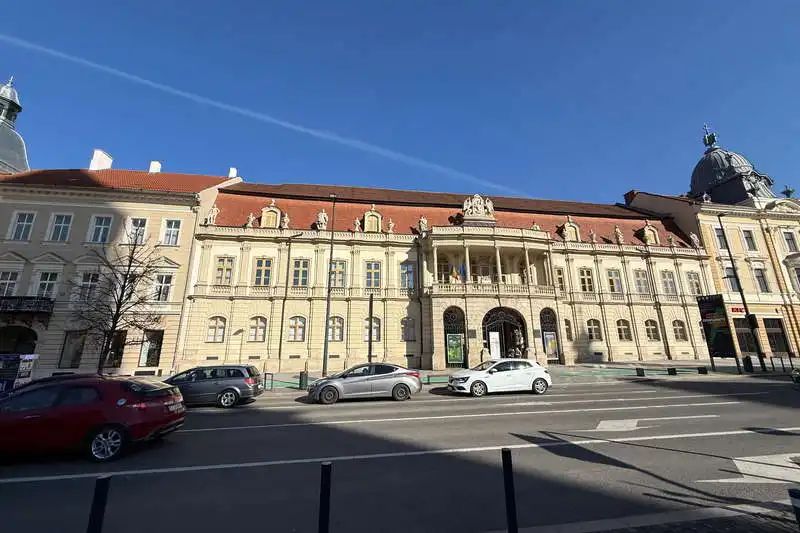
Art Museum, Cluj-Napoca, Cluj, Cluj

Artistic heritage in an emblematic Baroque palace

Where, when, how much?

📍 Where is it?

Art Museum Cluj-Napoca is located in the historic center of Cluj-Napoca, in the imposing Bánffy Palace, 30 Unirii Square. The location is within walking distance from the main tourist attractions and easily accessible on foot from the central area.


🕒 Visiting program

Hours may vary depending on the season or special events, but the museum is usually open:

  • Wednesday - Sunday: 10:00 - 17:00 (last entry about 30 minutes before closing)
  • Monday and Tuesday: Closed


🎟️ How much is the ticket?

The Art Museum Cluj-Napoca entrance ticket to the permanent exhibition costs 16 lei for adults. There are also reduced rates. For exhibitions temporary, the standard tariff is 12 lei for adults, with similar discounts for eligible categories.

For up-to-date information on prices and possible discounts, please consult the museum's official website before your visit.

About Cluj-Napoca Art Museum

Art Museum Cluj-Napoca, housed in the baroque Bánffy Palace in Cluj-Napoca, houses one of the most valuable art collections in Transylvania. The permanent exhibition includes works signed by great masters of Romanian painting such as Nicolae Grigorescu, Ion Andreescu, Ștefan Luchian and Theodor Pallady, with works representative of Romanian realism, impressionism and modernism. The collection also includes works by artists of the Cluj school and European creations from the 18th-20th centuries. A visit to the museum thus offers a concentrated insight into the evolution of Romanian art in a spectacular architectural setting right in the heart of the city.

A video about Art Museum Cluj-Napoca you can watch it here.

1. More artists

The Art Museum Cluj-Napoca brings together in its collections works signed by numerous artists representative for Romanian and Central European art.

In addition to the established masters of the 19th and early 20th centuries, visitors can discover works by Octavian Smigelschi, Camil Ressu, Nicolae Tonitza and Corneliu Baba, artists who have decisively marked the evolution of modern painting in Romania.

The collection also includes graphic and sculptural works by Dimitrie Paciurea and Romul Ladea, as well as works by contemporary artists linked to the Cluj art school.

Its stylistic diversity makes the museum an ideal place to follow the evolution of Romanian art over more than two centuries.

Nicolae Tonitza - Balcic Café

Nicolae Tonitza - Winter Landscape

George Șaru - The Patron Saint

Veres Zoltán - Boy reading

Koszta József

2. Theodor Aman and Nicolae Grigorescu

The collections of the Cluj-Napoca Art Museum include works by two of the pioneers of Romanian modern painting: Theodor Aman and Nicolae Grigorescu.

Theodor Aman, founder of modern art education in Romania, is known for his historical compositions, genre scenes and carefully constructed portraits. His academic style, influenced by the French school, emphasizes rigor, detail and compositional balance.

In contrast, Nicolae Grigorescu brings a breath of fresh air with landscapes and rural scenes full of light and sensitivity. His works capture the atmosphere, color and spontaneity of the brushstroke, and are defining for the affirmation of impressionism in Romanian art.

The presence of these two great artists in the museum's patrimony offers visitors the opportunity to understand the beginnings of modernity in Romanian painting and its evolution from academism to the expressiveness of light and color.

Nicolae Grigorescu - Teslar House

Nicolae Grigorescu - Gypsies with the Bear

Nicolae Grigorescu - Autoporter

Theodor Aman - Marghioala Boldescu

Th. Aman - Stephen the Great and the Abbot Purice

3. Stefan Luchian and Gheorghe Petrascu

In the heritage Art Museum Cluj-Napoca works by two great masters of color: Stefan Luchian and Gheorghe Petrascu.

Stefan Luchian, nicknamed „the poet of flowers”, is famous for his vibrant still lifes and for the sensitivity with which he captures the fragility of flowers, especially anemones. His free flowing brushwork and intense chromaticism mark a pivotal moment in the affirmation of Romanian modernism.

In turn, Gheorghe Petrascu He impresses with landscapes and interiors with a deep palette dominated by dense tones and strong contrasts. His paintings, characterized by thick impasto and a meditative atmosphere, reflect a mature and introspective view of reality.

Together, the two artists illustrate the diversity and expressive power of Romanian painting at the beginning of the 20th century, offering visitors to the museum an intense and memorable visual experience.


Gheorghe Petrascu - Venice

Gheorghe Petrascu - Autoportet

Gheorghe Petrașcu - Ulcică with field flowers

Ștefan Luchian - Apples

Dimitrie Paciurea - Stefan Luchian

Stefan Luchian - Tufănele

4. Brâncuși Month - temporary exhibitions

Every year, Art Museum Cluj-Napoca marks „Brâncuși Month”, an exhibition and cultural program dedicated to the great Romanian sculptor Constantin Brancusi.

The event brings Brâncuși's personality and artistic legacy to the fore through thematic exhibitions, lectures, screenings, guided tours and educational activities. Although the museum does not hold any major original works by the artist, „Luna Brâncuși” creates a valuable context to explore his influence on modern and contemporary art.

Cristian Răduță - Nomad

Vasile Gorduz - The bird that swallows its shadow

Bogdan Rața - Vitruvian View II

5. Palace architecture and inner courtyard

The Cluj-Napoca Art Museum is housed in the imposing Bánffy Palace, an outstanding example of Transylvanian Baroque architecture built in the 18th century. Its ornate facade, with sculptural details and elegant balconies, reflects the prestige and refinement of the time, while the interior retains original features such as monumental staircases and rooms with painted ceilings.

The inner courtyard of the palace, with its elegant arcades and bright atmosphere, creates an ideal setting for cultural events and guided tours. The harmoniously preserved open space invites visitors to admire the architectural details and enjoy a complete experience, combining the beauty of art with the historical splendor of the building.

Cluj-Napoca Art Museum

inner courtyard

palace architecture

Conclusion

Art Museum Cluj-Napoca is more than just a museum: it's a journey through the history of Romanian and European art, housed in an impressive Baroque palace. From classic masters such as Theodor Aman and Nicolae Grigorescu, From the modernists Ștefan Luchian and Gheorghe Petrașcu, visitors discover captivating visual stories in every room.

All the best!

Steps:

en_USEnglish