Travel guide, Rome, Italy

Meet the Eternal City!

About Rome

Rome, nicknamed the „Eternal City”, is one of the most fascinating destinations in the world, a place where ancient history, Renaissance art and modern life come together in spectacular fashion. The capital Italy It impresses with iconic monuments, vibrant squares, authentic gastronomy and an unmistakable romantic atmosphere.

With over 2,700 years of history, Rome was the center of the mighty Roman Empire, profoundly influencing Western culture, architecture, law and civilization. Today, the city is a veritable open-air museum, where at every step you discover ancient remains, impressive churches and monumental fountains.

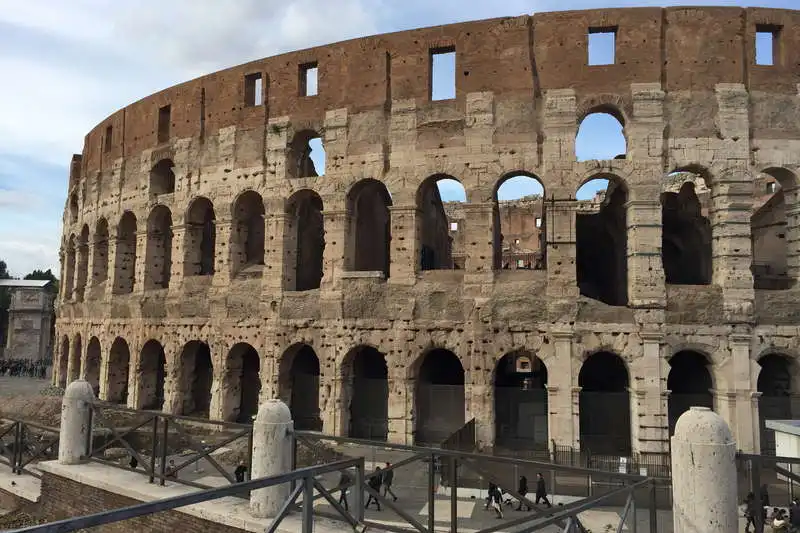
Highlights include Colosseum, the symbol of the city and one of the most famous monuments in the world, Roman Forum, the center of political and social life in Antiquity, and Pantheon, a remarkably preserved architectural masterpiece.

Rome is also the spiritual heart of Catholicism, hosting Vatican, the world's smallest country, home to the imposing St. Peter's Basilica and the famous Sistine Chapel, famous for Michelangelo's frescoes.

Beyond the historic sights, Rome delights with charming neighborhoods like Trastevere, with its narrow streets and traditional restaurants, or elegant squares like Piazza Navona and Piazza di Spagna. The Trevi Fountain attracts millions of tourists each year, each tossing in a coin to ensure their return to the city.

Today, Rome is a dynamic city where tradition and modernity coexist harmoniously. Whether you visit the city for its cultural heritage, authentic culinary experiences or romantic atmosphere, Italy's capital promises a memorable trip.

On mytravel.express you'll find useful information, practical recommendations and suggested itineraries to discover Rome as it deserves: step by step, with patience and a desire to be surprised.

Technical box - Rome

City: Rome
Country: Italy
Region: Lazio

Surface: about 1.285 km²
Population: ~2.8 million inhabitants (city administrative area); over 4 million in the metropolitan area

Average altitude: ~21 m above sea level
Currency: Euro (EUR)
Fus orar: CET (UTC+1), CEST (UTC+2 summer)

Ethnic structure (Rome)

  • Mostly Italians

  • Large communities of Romanians, Filipinos, Bangladeshis, Chinese and other European and non-European nationalities

Religious denominations

  • Majority Roman Catholic

  • Other Christian denominations (Orthodox, Protestant)

  • Muslim, Jewish and other faith communities

  • Persons with no religious affiliation

Route map

(click on objectives for extended version)

1. Colosseum

The Colosseum is the symbol of Rome and the largest amphitheater ever built in antiquity. Built between 72-80 AD by the emperors Vespasian and Titus, the monument could accommodate up to 50,000-80,000 spectators.

Gladiatorial fights, exotic animal shows and other public events dedicated to the people of Rome, in the period Roman Empire. The building impresses by its size (approx. 189 m long and 48 m high) and by the complexity of the hypogeum - the underground network used to organize the performances.

Today, the Colosseum is one of the most visited attractions in Italy, and the combined ticket usually includes access to Roman Forum and Palatin. Online booking in advance is recommended.

Colosseum

Colosseum

Colosseum

2. Roman Forum

The Roman Forum was the center of political, religious and commercial life in Rome ancient. Situated between Palatine Hill and Capitoline Hill, this vast archaeological complex brings together the ruins of temples, basilicas and administrative buildings that played a key role in the development of the city Roman Empire.

Public speeches, trials, religious ceremonies and triumphal parades were held here. Among the most important remains are the Temple of Saturn, the Arch of Septimius Severus and the Curia - the seat of the Roman Senate.

Today, the Roman Forum is one of the most impressive historical sites in Italy and offers an authentic glimpse into daily life in antiquity. The visit is usually included in the combined ticket with Colosseum and Palatin.

For the full experience, a guided tour or audio-guided tour is recommended, as the ruins really make sense when you discover their story.

Roman Forum

Roman Forum from Palatine Hill

The Roman Forum is impressive

Arch of Titus

3. Altar of the Fatherland

The Altare della Patria, also known as the Vittorio Emanuele II Monument, is one of the most imposing monuments in Rome. Located in Piazza Venezia, the building was built in the early 20th century to celebrate the unification Italy and its first king, Vittorio Emanuele II.

Made of white marble, the monument impresses with its monumental staircase, Corinthian columns and equestrian statue of the king. Inside is also the Tomb of the Unknown Soldier, a place of great symbolic importance to the Italians, which is permanently guarded.

Visitors can climb the monument's panoramic terraces for a spectacular view of the historic center, including Roman Forum and Colosseum.

The Altare della Patria is a major architectural landmark and an excellent orientation point for exploring Rome, combining modern Italian history with some of the city's most beautiful views.

One of the statues of Goddess Victoria at the Altare della Patria

Altare della Patria or National Monument to Victor Emmanuel II

Sculpture of Victor Emmanuel at the Altar of the Fatherland

Detail of the Altare della Patria monument

4. Piazza Navona

Piazza Navona is one of the most elegant and lively squares in Rome, famous for its vibrant atmosphere, baroque architecture and the street performers who bring it to life every day. The square was laid out on the site of the former Domitian's Stadium, and its elongated shape preserves the contours of the ancient arena.

The main attraction is Gian Lorenzo Bernini's famous Fountain of the Four Rivers, a symbol of Roman Baroque art. An Egyptian obelisk stands in the center of the composition, and the statues represent the four great rivers of the world known at the time.

On the west side of the square is the imposing church of Sant'Agnese in Agone, and all around the square are cafes, restaurants and terraces ideal for a relaxing break.

Today, Piazza Navona is a perfect place to experience Rome's authentic charm - whether you visit during the day, when it's bustling with life, or in the evening, when the lights give it a romantic and spectacular air.

Fountain of the Four Rivers in Piazza Navona

One of the 2 smaller fountains in Piazza Navona

Piazza Navona

5. The Pantheon

The Pantheon is one of the best-preserved monuments of antiquity and a true masterpiece of Roman architecture. Built in its present form in the 2nd century AD, during the reign of Emperor Hadrian, the temple was dedicated to all the gods of ancient Rome.

The building impresses with its monumental portico with Corinthian columns and its famous central oculus dome - a circular opening about 9 meters in diameter that lets natural light into the interior. The Pantheon's dome was, for centuries, the largest unarmored concrete dome in the world and remains a remarkable feat of engineering.

In the 7th century, the Pantheon was converted into a Christian church, which has contributed to its preservation. Inside are the tombs of important personalities, including the artist Raphael and Italian kings.

Located in the historic center of Rome, Today, the Pantheon is one of the city's most visited attractions and a place that strikes the perfect balance between simplicity, proportion and monumentality.

Pantheon - second meeting

In Pantheon

The famous oculus in the Pantheon dome

Obelisk in Piazza della Rotonda near the Pantheon

6. Trevi Fountain

The Trevi Fountain is the most famous fountain in Rome and one of the most romantic spots in the city. Built in the 18th century in Baroque style, the fountain impresses with its size, sculptural details and the spectacle of water falling into the monumental basin.

At the centre of the composition is a statue of the god Oceanus, surrounded by tritons and sea horses, symbolizing the force and dynamics of the waters. The monument marks the end of an ancient Roman aqueduct, the Aqua Virgo, which has supplied the city with water since antiquity.

Legend says that if you throw a coin over your shoulder into the well, you will return to Rome. Two coins bring new love, and three - marriage. Every day thousands of tourists keep the tradition alive and the money collected is donated to charity.

Whether visited during the day or in the evening, when it is spectacularly illuminated, the Trevi Fountain remains a symbol of Rome's romance and timeless charm.

Trevi Fountain - evening - first date

Fontana di Trevi - Statue of Neptune, flanked by tritons on horseback

Trevi Fountain

7. Spanish Steps

Piazza di Spagna is one of the most elegant and photographed squares in Rome, renowned for its vibrant atmosphere and famous Spanish Steps (Scalinata di Trinità dei Monti).

Built in the 18th century, the monumental staircase with 135 steps links the square to the Trinità dei Monti church, offering a spectacular view of the area. In spring, the steps are decorated with flowers, turning the place into a fairytale setting.

At the base of the stairs is the Fontana della Barcaccia, designed by Pietro Bernini and his son Gian Lorenzo Bernini, a fountain in the shape of a sunken boat, inspired by a local legend about a flood on the Tiber River.

The area around the square is known for its upscale shops and elegant streets like Via dei Condotti, making it an ideal spot for strolling, shopping or a break on the terrace.

Piazza di Spagna remains one of Rome's landmarks, where architecture, history and the Italian way of life come together in a refined and charming setting.

Obelisk near the Spanish Steps

Barcaccia Fountain in the Spanish Steps

Spanish Steps in Piazza di Spagna

8. Piazza del Popolo

Piazza del Popolo is one of the largest and most spectacular squares in Rome, located north of the historic center. Its name („People's Square”) derives from the church of Santa Maria del Popolo, right at the main entrance, an important religious and artistic landmark.

The square is designed in an oval shape and flanked by twin churches - Santa Maria in Montesanto and Santa Maria dei Miracoli - providing a visually harmonious setting. At the center of the square is an Egyptian obelisk, brought to Rome by Emperor Ramses II, symbolizing Rome's ties with Egyptian civilization and imperial power.

Piazza del Popolo is a popular meeting point for tourists and locals alike and offers access to the famous Pincio, from where a spectacular view of Rome opens up. The square also frequently hosts cultural events and fairs, making it a lively and dynamic part of Italy's capital.

This square is an ideal starting point from which to explore the historic neighborhoods of northern Rome and discover the combination of classical architecture and lively public spaces.

View of Villa Borghese from Piazza del Popolo

The Church of Santa Maria di Popolo flanks Piazza del Popolo

View of Villa Borghese from Piazza del Popolo

Obelisk in Piazza del Popolo

Fountain of the Lions in Piazza del Popolo

People's Gate

Conclusion

Rome is not just a tourist destination, but an unforgettable experience. Every corner of Italy's capital tells a story - from the grandeur Colosseum and elegance Piazza Navona, to romanticism Trevi Fountain and spectacular views from Pincio.

Rome combines ancient history, Renaissance art and modern life in a unique way, giving visitors the chance to explore temples, squares, fountains and monuments that have inspired generations. The gastronomy, chic cafes and vibrant atmosphere make every walk memorable.

We invite you to discover Rome step by step, to lose yourself in its picturesque streets and be fascinated by the eternal beauty of the „Eternal City”. A trip here is not just a tour, but a true experience of a lifetime.

All the best!

Steps:

en_USEnglish